24th January 2020
We arrived at the tiny fishing village of Boca da Valeria at breakfast time. Situated at the confluence of the Rio da Valeria and the Amazon, midway between Parintins and Santarém, it is a remote and primitive settlement of around 75 souls, descended from intermarriage between Portuguese settlers and local Indigenous people. They are known as Caboclo.
There are no roads, just a simple dirt path winding through the village, lined with wooden and reed huts, while other trails lead off into the rainforest. The dwellings are basic, with open doorways and windows, no glass, only wooden shutters to keep out the rain. The villagers live by hunting and fishing, and the few ships able to visit are greeted with great enthusiasm. Indeed, the arrival of our cruise ship was a spectacle, drawing in people from surrounding settlements to witness the rare event.

The Magellan anchored precariously, less than 100 metres off the shoreline, adjacent to the outflow of the Rio da Valeria. This made for a very short, tender boat ride to the small jetty, just another 100 metres from the river’s mouth. I knew it would be a good day when we spotted our first, very rare, pink Amazonian dolphins swirling and flipping behind our craft, hunting for fish disturbed by our propeller in the impenetrable, muddy water.
Tying up at the jetty, we disembarked in crocodile fashion through a small wooden hut, emerging into a tunnel of grinning, brightly dressed locals.
Sue and I had decided to hire one of the motorised canoes to explore this part of the rainforest and were keen to set off early before all the available craft were taken. Stepping past the tightly packed line of Caboclos, I spotted one holding a picture of his canoe. A quick exchange of sounds, smiles, and a thumbs-up later, we peeled away from the melee and followed him to the riverbank.
Pleasingly, he had brought his son along today, a serious-looking boy of about seven. As we settled into the elongated, roofed canoe, our captain produced a small lemonade bottle filled with petrol and reassuringly topped up the engine’s fuel tank. With his son perched at the sharp end, he then pushed us off into the river’s flow, started the motor, and began our very loud putt-putt journey upstream.

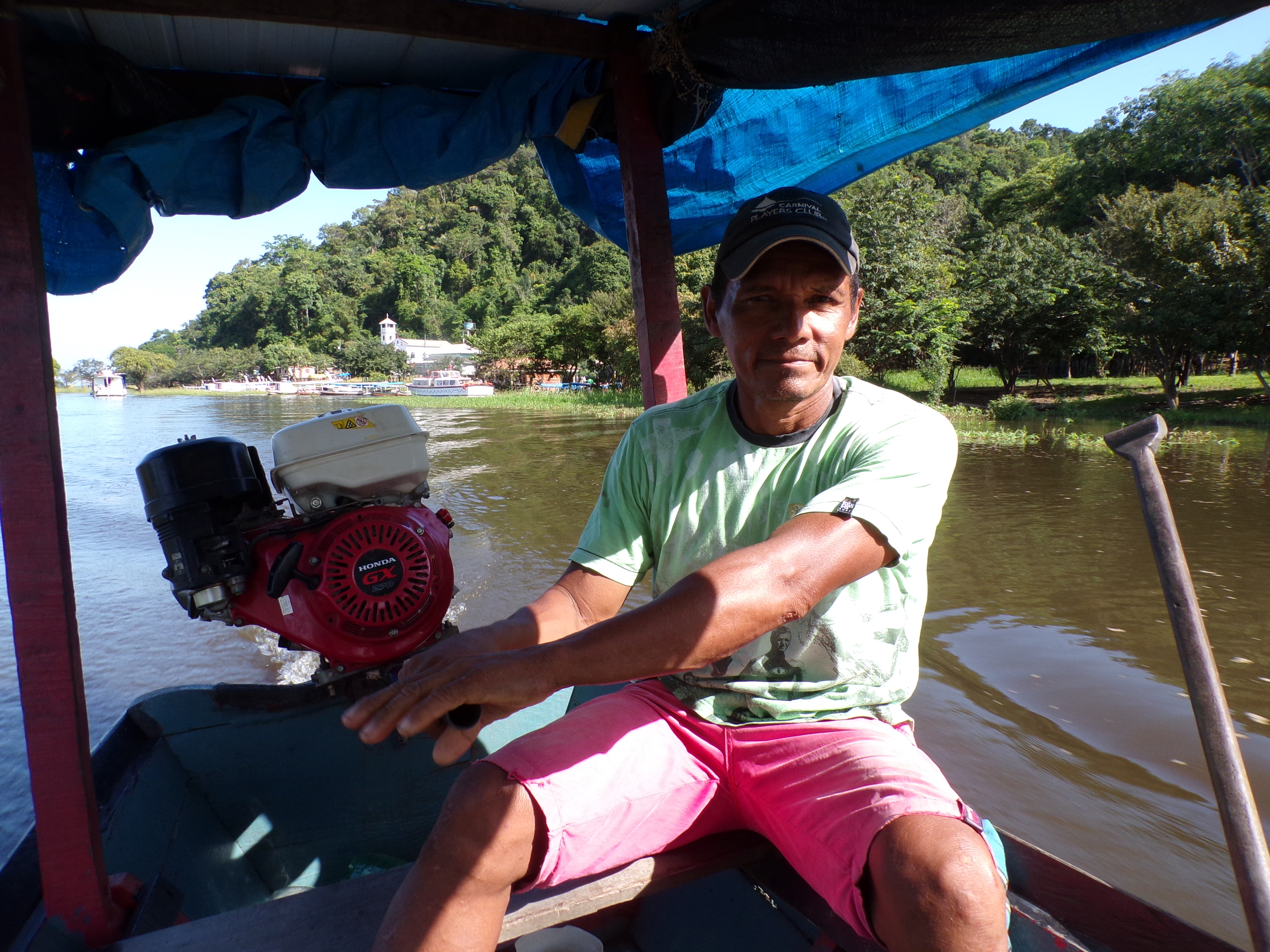
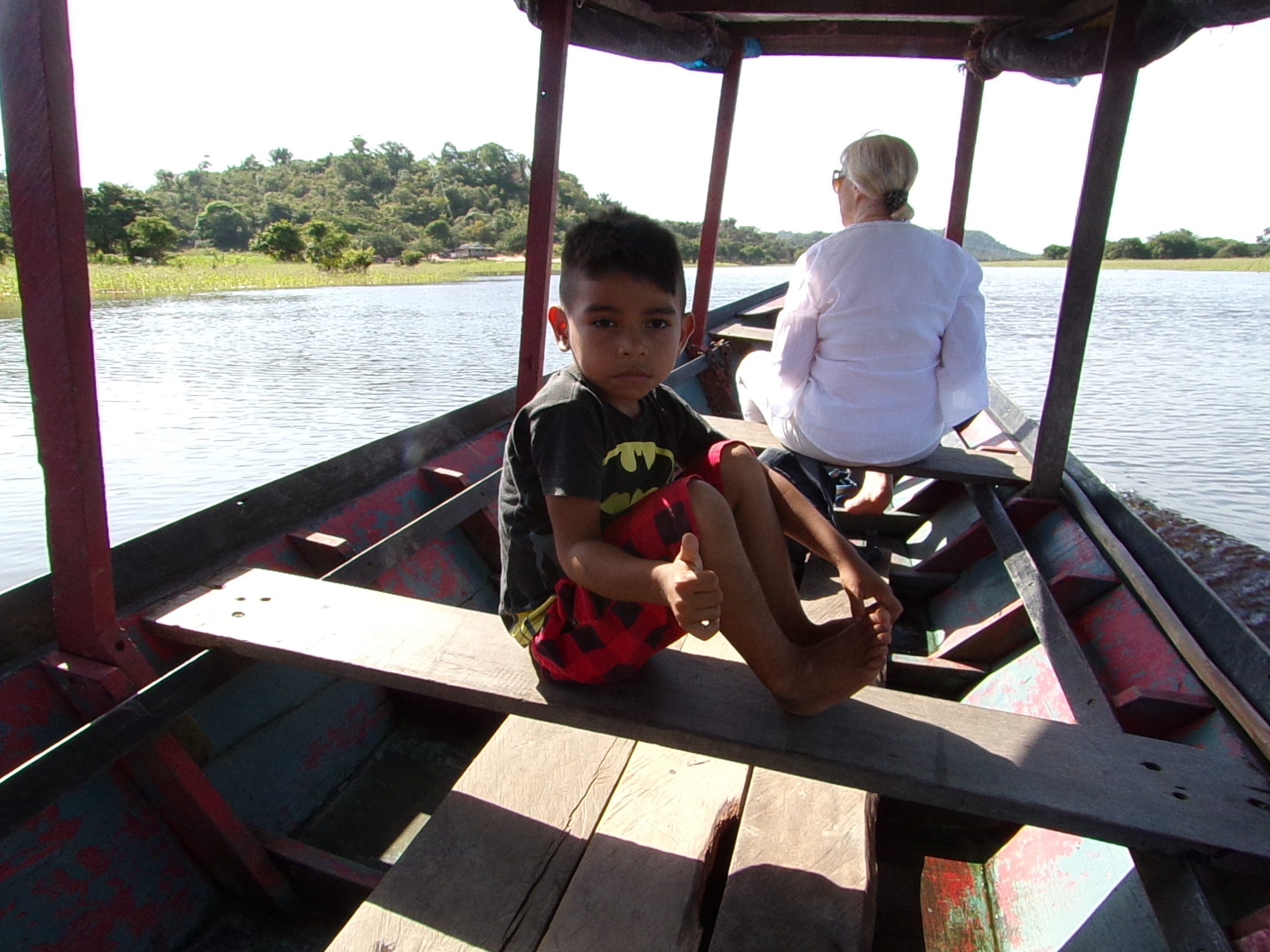
Our 40-minute journey brought us familiar sights from our previous day’s expedition, river birds, Indigenous people fishing from canoes, others put-putting hurriedly to some unknown destination, and a variety of river dwellings. These seemed tidier than those we had witnessed over the past few days; perhaps the Portuguese genes had a part to play in that.
On our return journey to the little jetty, where a native crowd of enthusiastic European spotters awaited, I noticed a large white river bird snatch a fish from the water. However, about ten metres above the river, it seemed to lose its grip, and the fish spiralled back to safety. Wheeling around, the bird immediately dived again and caught what I assumed was another fish, only to lose it once more in the same way! I watched, fascinated, as the unfortunate creature repeated this sequence four times before I lost sight of the action as we rounded a sharp bend. Maybe the bird had the misfortune of snatching a piranha and, in a bid to save its legs from being bitten off, sensibly let go.
Whatever the truth, I was left with the image of a determined but hapless hunter, locked in a battle of wits with its slippery, and possibly toothy, prey.

Arriving back at the village, we set off to explore. By now, many more camera-toting fellow passengers had gathered, all equally eager to snap photos of the little children dressed in colourful costumes or perhaps holding a pet sloth, turtle, baby caiman, or some long-tailed creature with a particularly sweet face.
We happily joined in, capturing the charming scenes and rewarding the children with small gifts sourced from the ship’s inventory, bars of soap, sachets of coffee, small bottles of water, and pencils. For the adults, we handed out one-dollar bills, all of which were gratefully received, especially the soap.
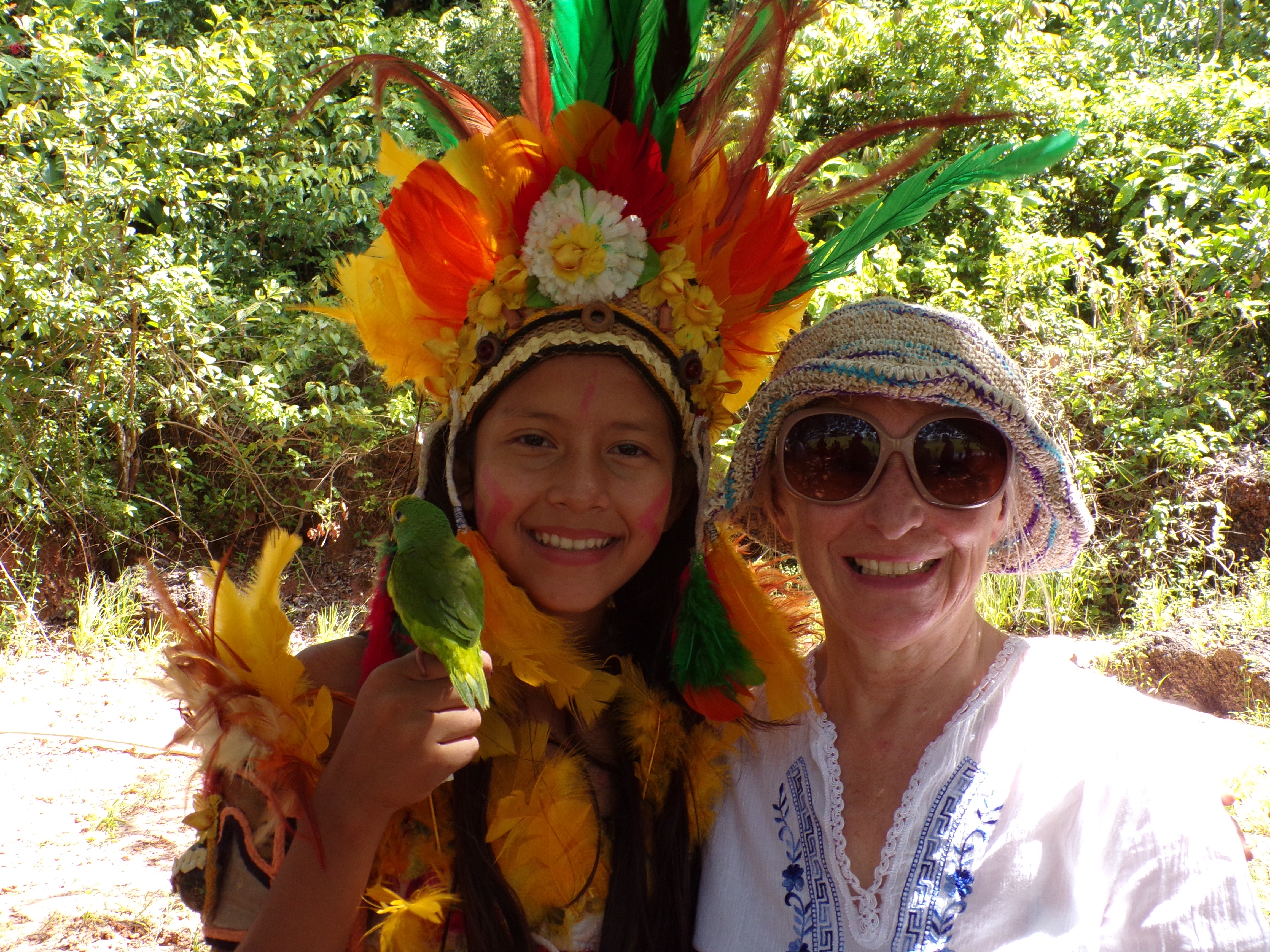
Some villagers had set up small stalls beneath the shade of their wooden huts, selling locally made trinkets and artwork. Sue browsed these with great interest and, after much deliberation, bought yet more pictures to display on what little wall space we had left at home.
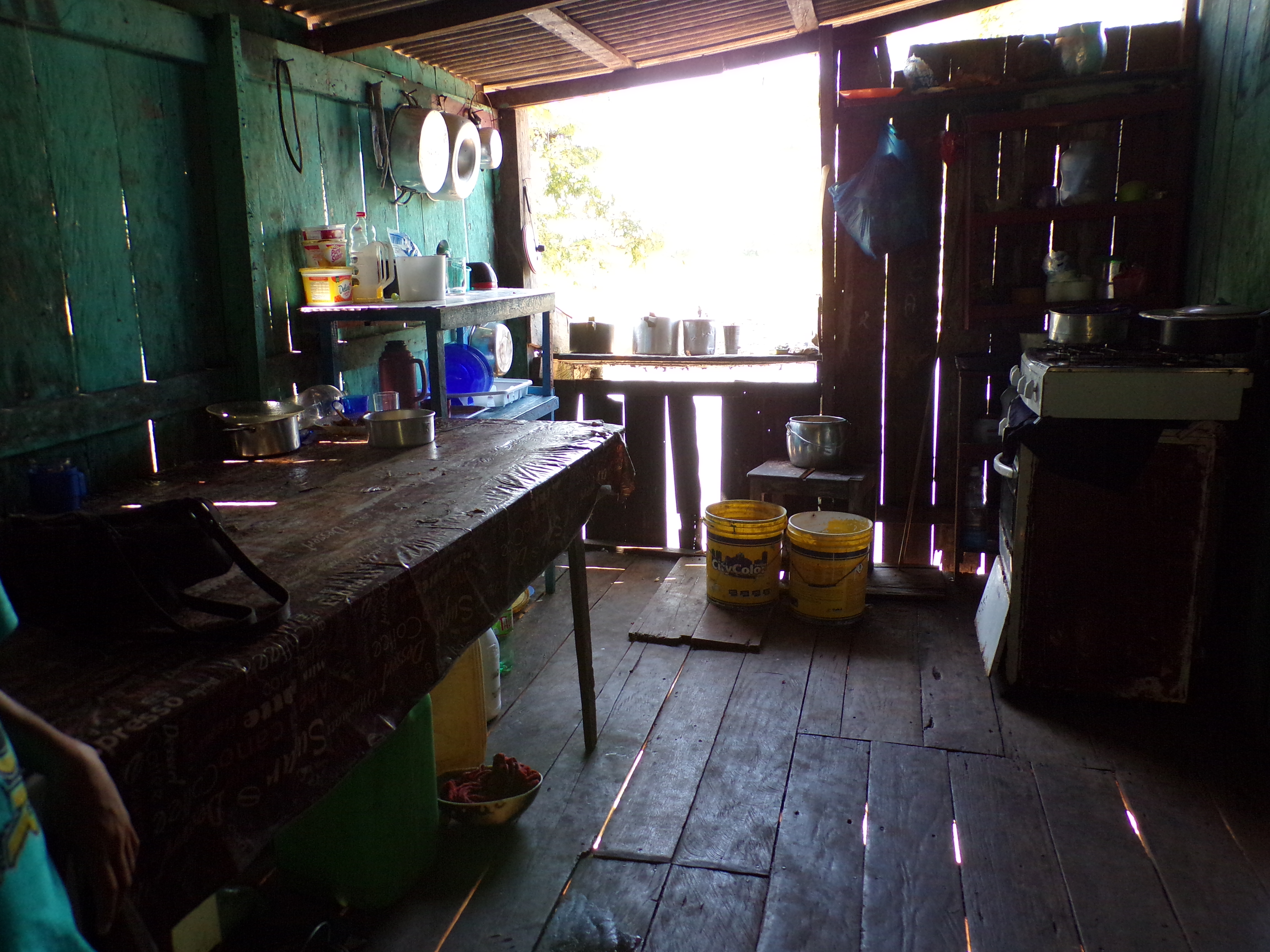
We handed over a dollar to enter one of the larger dwellings, where the matron of the house welcomed us warmly. She was clearly proud of her home, beaming as we nosed around her simply furnished but immaculately kept space. I couldn’t imagine Sue being quite so gracious if strangers turned up at our door requesting a quick look around! However, this woman was selling the only commodity she had for the benefit of her family, and she was at ease with that. We were equally happy to oblige. Obrigado!
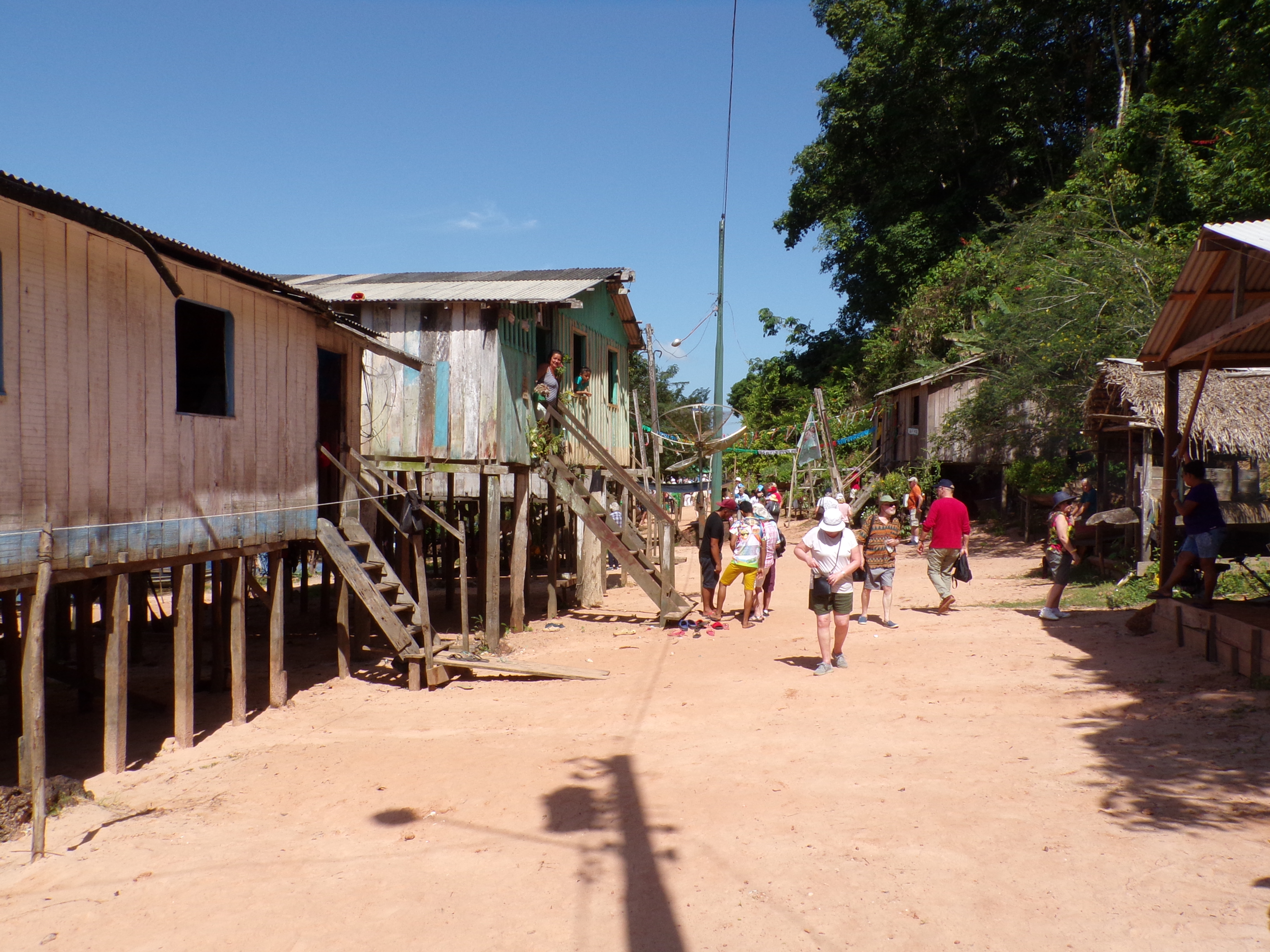


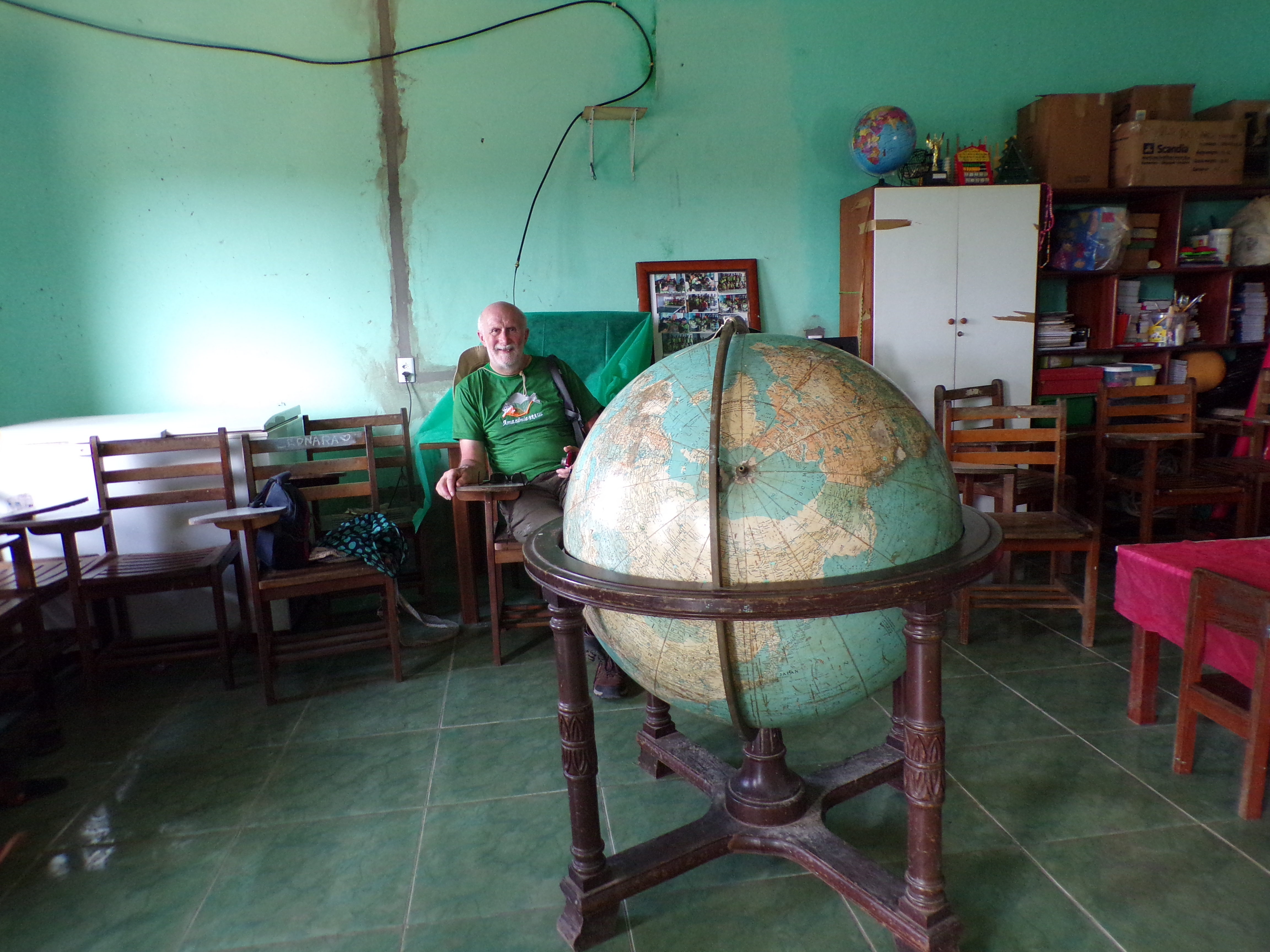
As on the previous day, the sun was fierce, but we managed to see all that this little village had to offer, including its small church and schoolroom. We made a donation of some cash to support the community in some small way.
I may be wron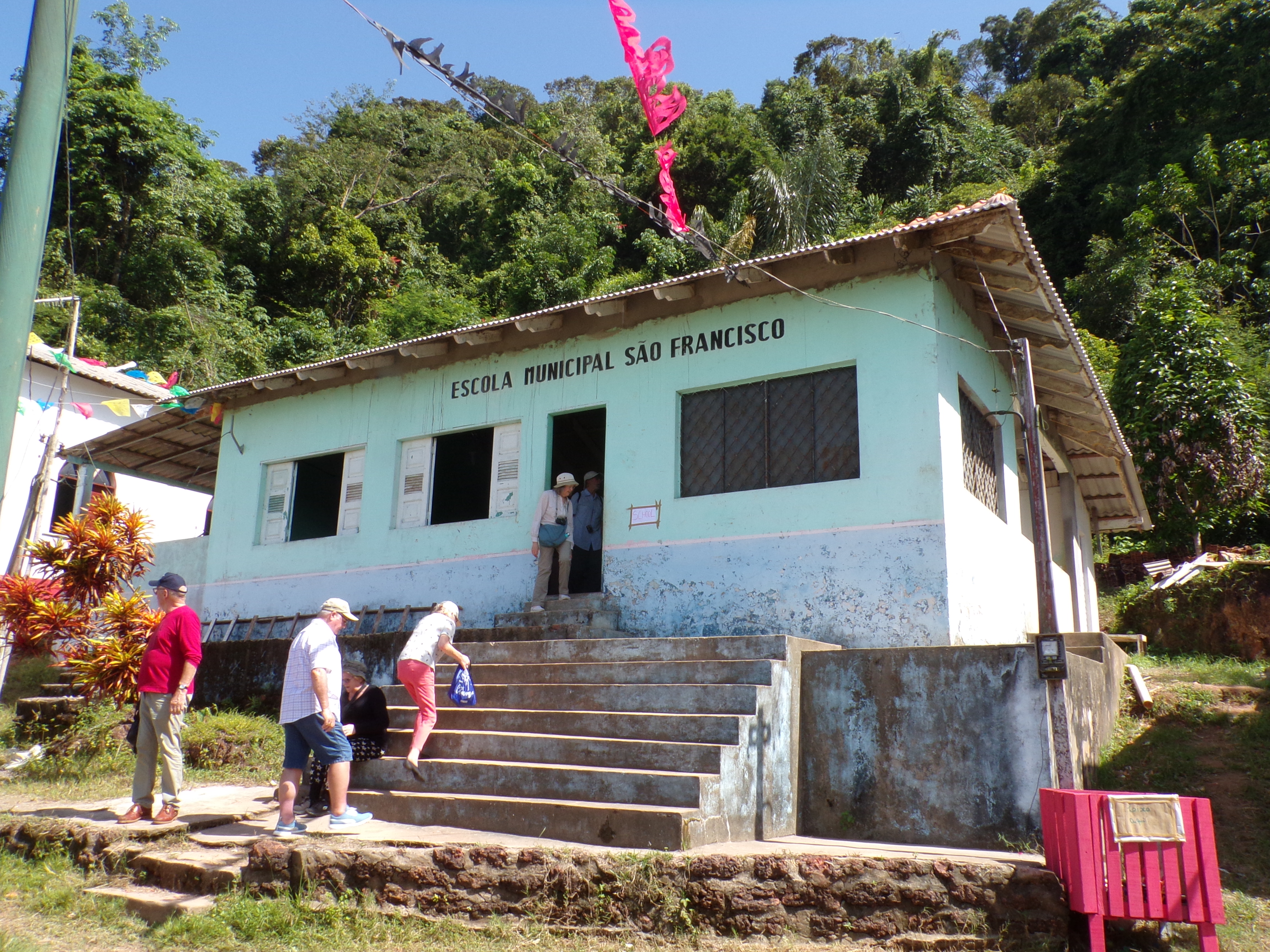 g, but I don’t believe our visit exploited or disrupted their chosen way of life. If anything, both sides gained something from our brief encounter, at least those of us who ventured beyond the buffet tables (many didn’t). These people are not an isolated Indigenous group in need of protection; they are aware of the wider world, yet they do not appear envious, nor do they beg. They seem at ease with these occasional meetings, and I suspect they consider us the richer for having met them, a sentiment with which I wouldn’t disagree.
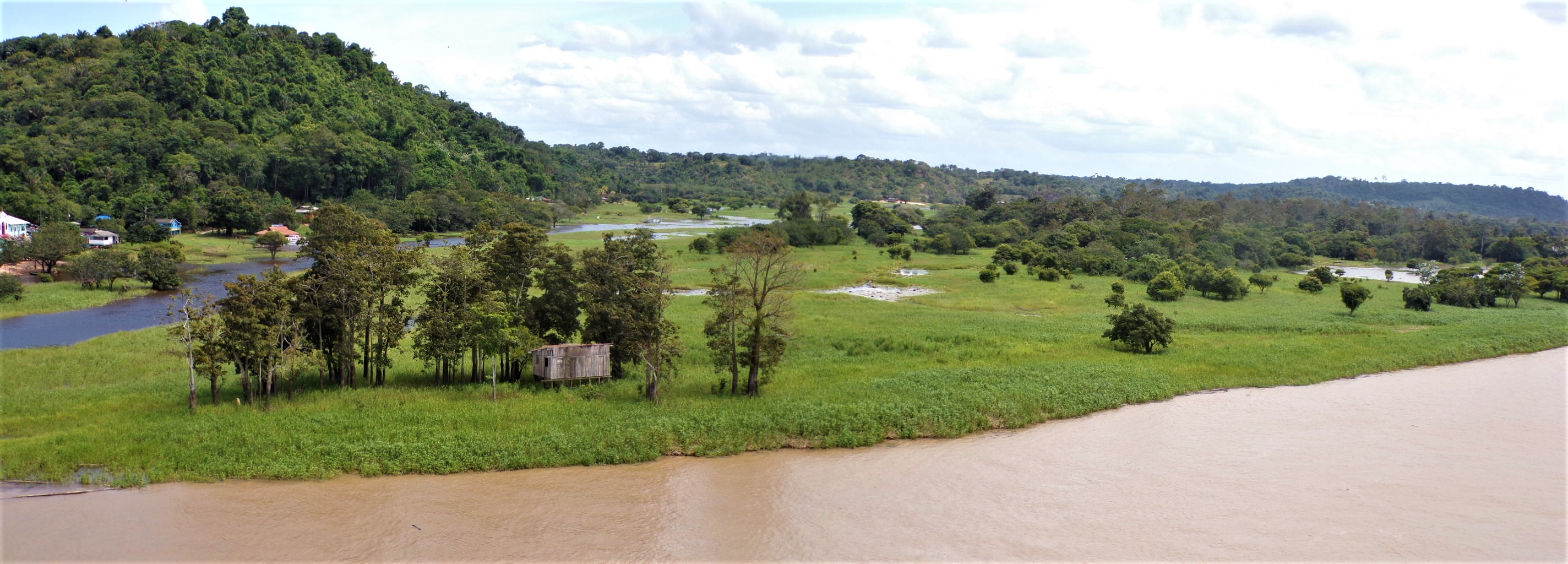
Back on board, refreshed with food and drink, we stood high on Deck 10, watching the village fade into the distance. We snapped a few final shots of the pink dolphins flipping through the waves offshore, blindly diving after fish detected with their acute senses.
It was a blissfully enchanting scene, and I can only wish these wonderful people the very best for the future. The photos I took today are filled with smiles, and the experience has been truly humbling.

It was late in the afternoon when we left the village in peace and continued our journey upstream. I wonder what tomorrow will bring?
 Palmer Family
Leave a comment